

What Are the Ingredients in Hand Soaps? How Do They Clean Your Skin?
Substances resembling soap have been found in artifacts dating back almost five thousand years ago, with evidence of ashes boiled with fat on clay cylinders from ancient Babylon. For most of its history, though, soap has been used primarily for industrial purposes, such as textile production. It’s only been in the last two hundred years that soap has become a staple in most households. In 1846, a doctor in Hungary, Ignaz Semmelweis, observed a marked reduction in cases of childbed fever when people washed their hands with chlorinated lime. Legendary nurse Florence Nightingale also saw a connection between handwashing, hygiene and survival during the Crimean War.
What Are the Common Ingredients in Hand Soaps?
Though water is typically the base, other key ingredients in any hand soap include:
- “Surfactants,” which produce lather and function to remove dirt and oils—common surfactants include coconut and palm kernel oil, sugars fatty alcohols and fatty acids
- Moisturizers, such as aloe vera, glycerin or plant oils to prevent other substances from excessively drying the skin—certain types of fat are common moisturizers
- Thickeners and stabilizers to manage texture and viscosity
Substances that are not essential, but are often added, include:
- Fragrance or color agents
- pH balancers or adjusters
- Preservatives
How Does Hand Soap Work?
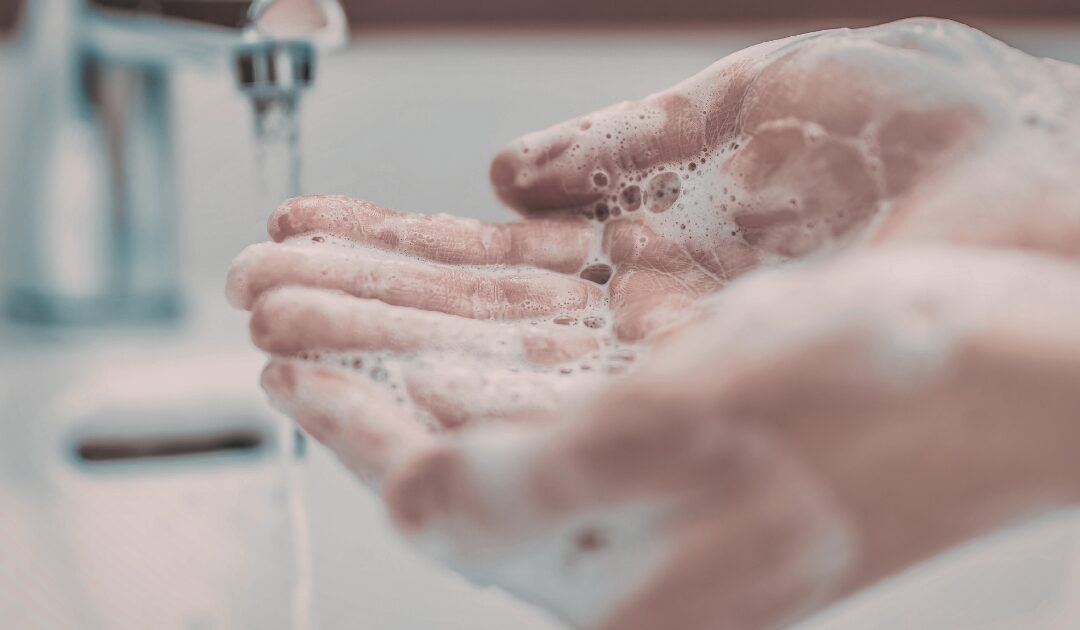
Hand soaps create a molecule with a water-attracting head and a fat-attracting tail. When you lather up with hand soap, mixing it with water, the molecules travel across your skin, with the tails grabbing onto oil, grease and other microorganisms, breaking them into smaller pieces while simultaneously trapping them in water-based spheres called micelles. The lather lifts those spheres from your skin, so that they are washed away when you rinse your hands.
Why Soap Works Better than Plain Water
While rinsing your hands with just water can remove some dirt, grease and oils, it’s far less effective than using some type of hand soap. Because oil and water don’t mix, using plain water may help remove larger pieces of grit and dirt, but it won’t break down oils on your skin that can trap many types of dirt and microorganisms.
