

More Woodworkers Seek Reconnection with Wood through Hand Planes, Chisels and Hand Saws
The technological developments in woodworking over the past century have been astonishing, making it possible for both hobbyists and professional woodworkers to turn out furniture and other projects that are durable, attractive and well-seemingly “well-crafted.” But for many woodworkers, the joy of working with wood is exactly that…working with wood. When machines do most of the work, there’s a sense that something’s been lost. For that reason, many who are passionate about working with wood have taken a conscious step backward, embracing the use of hand planes, chisels and hand saws, as well as more tradition forms of wood joinery.
The Rebirth of Hand Tools
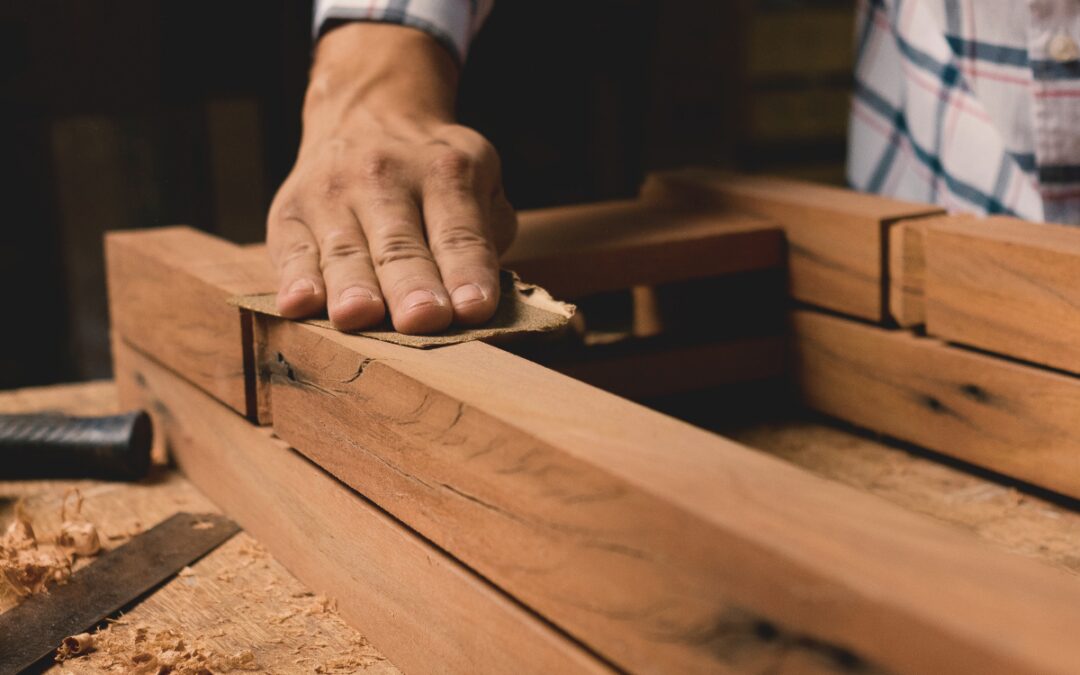
If you polled most woodworkers, they’d generally agree that the one aspect of the craft that they least look forward to is sanding. Modern table saws, jointers and planers are all very efficient at getting lumber to the right dimensions and at ensuring uniformity across the length and width of a board. Unfortunately, though, they don’t leave the surface very smooth and can leave visible marks. Most woodworkers follow a fairly tedious regimen of sanding, starting with lower grit sandpapers and working their way up to a smooth finish.
This is something that woodworkers 150 years ago never did. Why? Because they could get a smoother finish with a single pass of a hand plane than any sandpaper could ever produce. Before the Industrial Revolution and the advent of power tools, the hand plane was the workhorse of any wood shop, used for dimensioning, flattening and smoothing all lumber. Woodworkers typically used three specific types of general planes:
- The jack plane (the one your father or grandfather probably had lying around in the garage or his shop)—A general purpose plane, this is used to remove material, clean up edges for glue joints and take bumps and dips out of lumber. It’s usually about 14-15 inches long and weighs 6-8 pounds
- The jointer plane—Used almost exclusively for flattening long or large boards, this behemoth is typically around 22 inches long and can weigh up to 10 pounds
- The smoothing plane—Typically between 8 and 10 inches long, weighing between 3 and 6 pounds, it’s the last plane to touch the wood, leaving the surface like glass (if properly sharpened).
The chisel is also an essential component in a hand tool shop, used to cut mortise and tenon joints, dovetails and in general cleanup.
Hand tool enthusiasts will even eschew the modern table saw, choosing instead to use a range of hand saws to handle virtually every type of cut.
Taking More Time, But Well Worth It
Creating custom furniture and other works in wood using only hand tools generally takes more time than using the latest machine. Hand tool enthusiasts say the trade-off is worth it.
