

The Secret to Those Thick, Soft and Fluffy Goodies
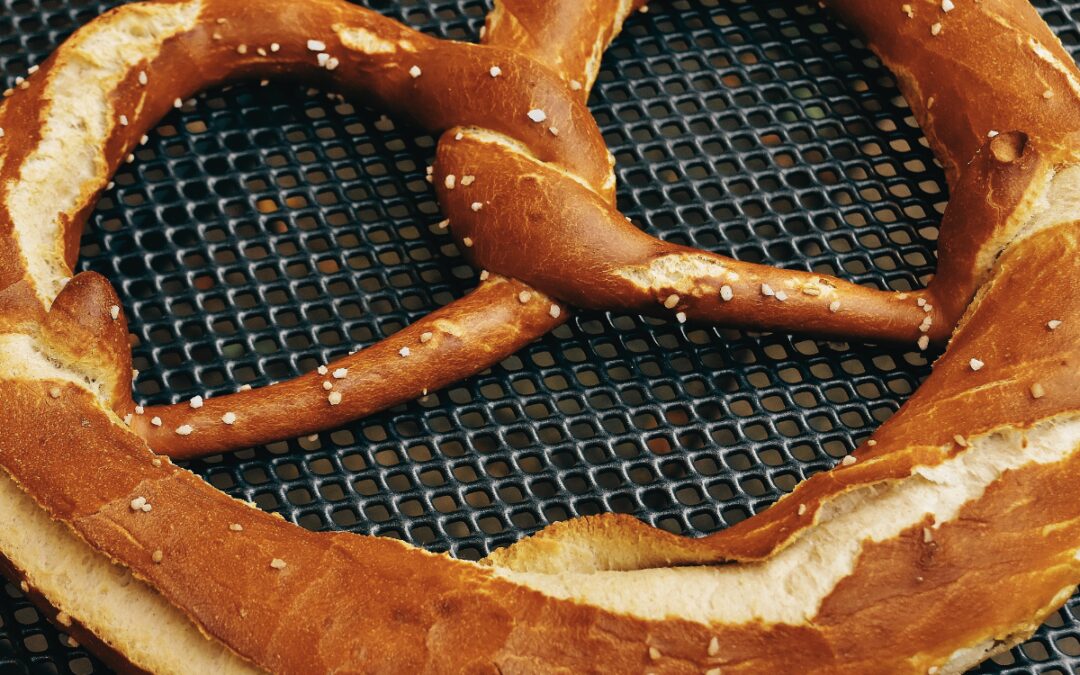
Have you ever had an Amish pretzel, maybe with a little melted butter, some cheese sauce, a little honey mustard or maybe even a cinnamon-sugar glaze? Those soft, doughy delights literally melt in your mouth. What makes them different from traditional pretzels? How do they get that signature glossy crust and fluffy interior, unlike the crunchy pretzels available everywhere?
The History of the Pretzel
Legend suggests that what we call the pretzel originated around the 7th century CE, when a monk took leftover strips of dough and twisted them to appear like praying arms, baking them and giving them to children as rewards for learning certain prayers. Furthermore, because the early church banned dairy, eggs and meat during a fast, the simple flour and water concoctions soon became a major component of everyone’s Lenten diet. The monks referred to them as “bracellae (Latin for “little arms”),” which the German language modified to “bretzel.” The church embraced the pretzel, with officials stating that the three holes in the classic pretzel symbolized the Holy Trinity. The pretzel became a good luck sign for many German bakers.
When German and Swiss immigrants flooded into the New World in the late 1700s, they brought pretzel recipes and know-how with them. By the turn of the 20th century, thousands of bakeries, bars and even street vendors sold pretzels as an affordable repast for the working class.
How Is the Amish Pretzel Different?
The Amish pretzel differs from the traditional hard pretzel in a number of ways:
- The traditional pretzel commonly uses flour, water, yeast, salt and some type of sugar (either refined granulated sugar or corn syrup). As a general rule, an Amish pretzel doesn’t have salt in the dough and adds butter to the mix. In addition, the Amish pretzel typically contains more water, contributing to the soft and fluffy texture.
- Hard pretzels are commonly formed by machines that extrude dough and twist it into shapes. Amish pretzels are almost always mixed, rolled and shaped by hand.
- Traditional hard pretzels are dipped in a lye (sodium hydroxide) solution, with reacts with surface starches, creating a dark brown and crispy crust. The pretzels are then baked at high temperatures (usually over 500 degrees F) to remove all the moisture. Amish pretzels are dipped in a baking soda solution for a lighter color, milder flavor and glossy crust.
- Traditional hard pretzels typically contain preservatives. Amish pretzels do not.
Taste the Difference
There are national chains with “Amish” pretzels on the menu, but the best way to appreciate the real thing is to take a trip through Amish country. You won’t have to go very far to find a bakery that offers some of the best pretzels you’ve ever had.
