

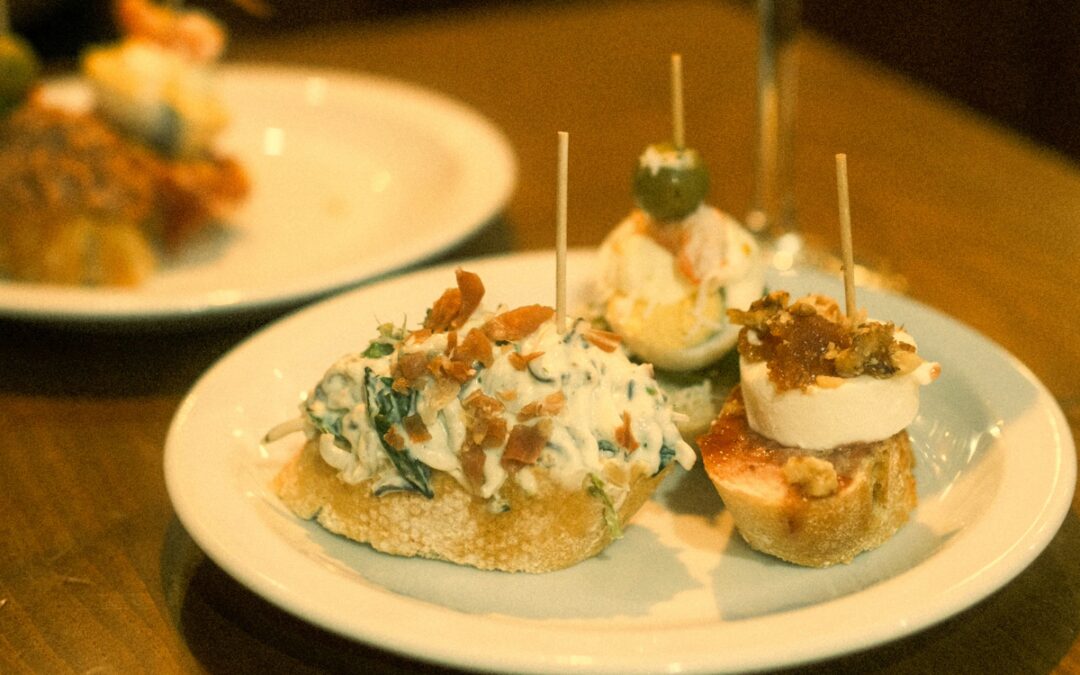
The Long Legacy of the “Small Plate”
Culinary trends change fast, but one that’s been around for a while is the so-called “small plate.” What to many may seem like a euphemism for an appetizer often takes center stage. The concept, however, isn’t new. In fact, it’s been a tradition in Spain for around 800 years and has influenced chefs and gastronomes around the world—it’s known a the “tapa.”
What Is a Tapa and How Did It Originate?
The word “tapa” comes from the Spanish term “tapar,” which translates loosely as “to cover.” A tapa, then, is essentially a lid or “top” over a plate of food. Though typically not done anymore, in the early days of tapas, servers would place the food directly on top of a patron’s wine or beverage glass to keep flies, dust or sand out. As the tradition has evolved, the food is served in small bowls, on small plates or even on platters (for sharing).
Like many things, the origins of the tapa are the subject of some speculation. The earliest references to something akin to a tapa were in the late 13th century, when King Alfonso X of Castile became ill and could only eat small bites of food at a time. The king, after recovering from his illness, decreed that inns and taverns could only serve wine if they also served small plates of food with it.
The practice of placing the food directly on top of a wine glass is often attributed to another King Alfonso (the XIII), who reigned in the late 19th century. This king allegedly ordered a glass of wine in an inn in Cadiz, a city known for its blustery environment. To prevent sand from blowing into the king’s libation, the waiter covered it with a slice of cured ham. The king enjoyed his first beverage and snack so much that he asked the waiter for another “vino con la tapa.”
Tapas around the World
While the varieties of tapas are almost endless, the ones most synonymous with Spain, where the dish was created are:
- Jamon Iberico, the very thin slices of cured ham believed to be the tapa served to King Alphonso XIII
- Patatas bravas, cubed potatoes fried and served with a flavorful sauce
- Gambas al Ajillo, or garlic shrimp, typically served with a whisper of chili pepper
- Croquetas, fritters with a wide range of fillings, including ham, mushrooms, chicken and a sauce
Among the culinary offerings inspired by tapas are:
- Chaat and Pakoda in India
- Petiscos and pasteis in Portugal
- Cicchetti in Italy (mostly in Venice)
- Bocas in Central America
Though you’ll find “tapas” in Filipino cuisine, it’s a completely different dish, usually some form of marinated meat, ranging from beef to chicken to pork and even venison. Intended as a substantial main course, Filipino tapas are the antithesis of the Spanish small plate.
Tapas—A Great Way to Enjoy Variety in Dining
While tapas can be suitable for individual dining, they are often the focal point of social dining, where friends and family gather and share a wide range of small plates.
