

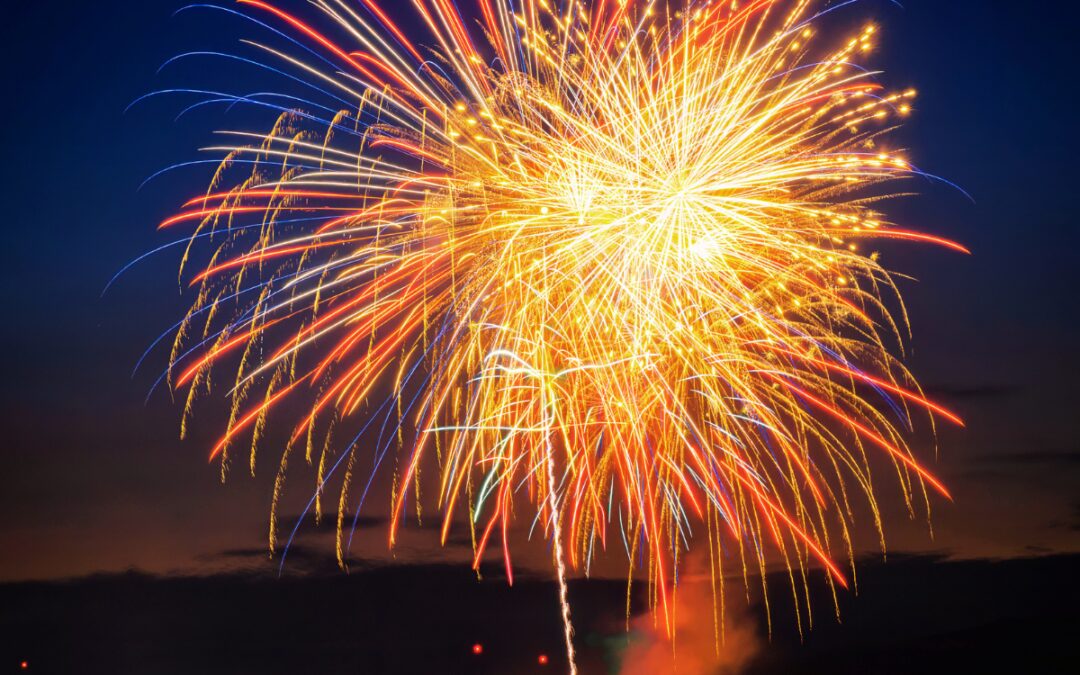
Founding Fathers Encouraged Use of Pyrotechnics to Celebrate New Nation
Whether it’s joining the throngs of celebrants at your local fireworks display or it’s going out in the backyard with the family to launch a few bottle rockets, light some sparklers or even send up your own colorful light show, fireworks and the Fourth of July just go together. How did the tradition start? How have fireworks changed over the years?
The Origins of Fireworks
Historians note that something akin to fireworks has existed for more than two thousand years. Archaeological digs have produced evidence of crude forms of fireworks, such as hollow bamboo shoots packed with gunpowder (invented by the Chinese around 800 CE), which were apparently tossed into fire pits at weddings, births and festivals to ward off evil spirits. Not long after they invented gunpowder, the Chinese started attaching firecrackers to arrows as a sort of rocket. Historical accounts also indicate that European monarchs in the late Middle Ages also had fireworks displays to commemorate military conquests and other festive events, such as coronations.
Why Fireworks Are a Fourth of July Tradition in the United States
John Adams, one of the nation’s founding fathers, thought the anniversary of American independence should be a grand and loud one. He reported told his wife, Abagail, that the colonists’ freedom from British rule should include “bells, bonfires and illuminations” across the fledgling nation. Accordingly, in 1777, at the first anniversary of American independence, there were organized fireworks shows in Boston and in Philadelphia. Legend also suggests that officials encouraged the use of fireworks as an alternative to the more common form of celebration—firing loaded weapons, including cannons.
How Have Fireworks Changed Over the Years?
The earliest forms of fireworks were simply hollow sticks or branches, typically bamboo, which formed hot air pockets inside when tossed on a fire, emitting a loud pop or crack. Once gunpowder was developed, it was commonly stuffed inside the hollow branches or tubes.
By the time of the Renaissance, pyrotechnical experts had devised ways to have spinning wheels on fireworks and to project them higher into the atmosphere. In the mid-19th century, chemists devised a way to burn different types of metals in the fireworks, so that they had a much wider range of color. In the 21st century, most fireworks displays are computer controlled, with electronic firing devices to allow for pinpoint detonation.
Carry on a Proud Tradition
This year, when you’re lighting that firecracker or gazing up at an awesome display on a balmy summer night, know that you’re a part of a tradition as old as the United States.
